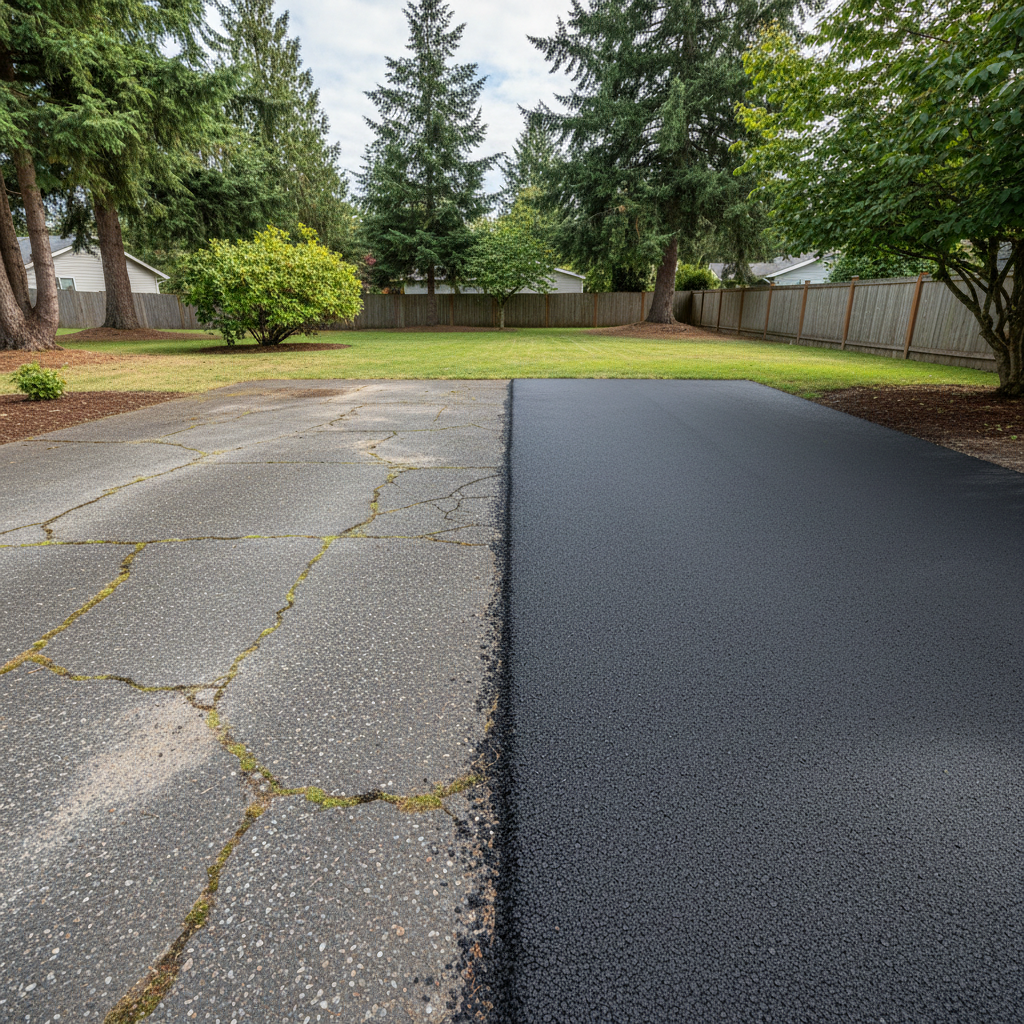
Alright, let's talk paving. You've got a parking lot or a big driveway, maybe for your home business or a rental property here in Lakewood, and you're wondering if you should go with asphalt or concrete. It's a common question, and honestly, there's no single 'best' answer for everyone. It really depends on what you're looking for, your budget, and how much fuss you want to deal with down the road.
I've been laying down pavement around here for years, seen all sorts of conditions, from the sandy soils near American Lake to the clay-heavy spots further east. So, I'll give it to you straight, no fluff.
Cost: Upfront vs. Long-Term
When it comes to the initial sticker price, asphalt usually wins. It's almost always cheaper to install than concrete. Think about it like this: asphalt is a petroleum product, and while those prices fluctuate, the materials and labor for laying it down are generally less intensive than concrete.
Concrete, on the other hand, is a bigger upfront investment. The materials cost more, and it takes more specialized labor and time to pour, finish, and cure properly. You're paying for that strength and longevity right from the start.
But here's the kicker: 'cheaper upfront' doesn't always mean 'cheaper overall.' We'll get to that when we talk about maintenance.
Durability & Lifespan: Built to Last?
This is where things get interesting, especially with our Pacific Northwest weather. Asphalt is flexible. It handles the freeze-thaw cycles we get, especially in winter, pretty well because it can expand and contract without cracking as easily as concrete. A well-maintained asphalt lot can last 15-20 years, sometimes more, especially if it gets regular sealcoating. It's tough, but it's not invincible. Heavy loads, like big trucks constantly turning in the same spot, can cause rutting over time.
Concrete is rigid. It's incredibly strong and can handle heavy loads without rutting. A concrete parking lot, properly installed, can easily last 30 years or even longer. We're talking serious longevity here. However, that rigidity is also its weakness in some ways. If the ground underneath shifts, or if you get a really harsh freeze-thaw cycle with poor drainage, concrete is more prone to cracking. Once a concrete slab cracks, it's a bigger deal to fix than an asphalt crack.
Maintenance: What's the Real Work?
Okay, this is where the long-term cost discussion comes back into play. Asphalt needs love. To get that 15-20 years out of it, you're going to need to sealcoat it every 2-5 years, depending on traffic and sun exposure. Sealcoating protects it from UV rays, water penetration, and keeps it looking sharp. You'll also need to fill cracks as they appear. It's ongoing maintenance, but it's generally cheaper and easier to do than concrete repairs.
Concrete is lower maintenance day-to-day. You don't need to sealcoat it regularly like asphalt. You might want to seal it every few years to protect against stains and moisture, but it's not as critical for its structural integrity. When concrete does need repair, though, it's usually more involved and expensive. You're often looking at patching, grinding, or even replacing entire sections, which can be a bigger headache and hit to the wallet.
Appearance: Curb Appeal Matters
Visually, they're pretty different. Asphalt gives you that classic, dark black surface. It looks clean and uniform when it's freshly paved and sealcoated. It's a very common, professional look for parking areas.
Concrete offers more versatility. It's naturally lighter, which can be a plus in the summer because it absorbs less heat. You can also get it stamped or colored to achieve different looks, which might be appealing if you're going for a specific aesthetic for your property. It tends to look a bit brighter and more modern to some folks.
My Recommendation for Lakewood Homeowners
Alright, so what's the verdict for folks around here?
For most homeowners with a standard driveway or a small parking area that sees regular car traffic, asphalt is usually the better choice.
- It's more forgiving with our climate's temperature swings and occasional heavy rains.
- The upfront cost is lower, which is a big deal for many homeowners.
- Maintenance, while ongoing, is generally less expensive and easier to manage with sealcoating and crack filling.
- And let's be honest, for a typical residential setting, the dark, clean look of asphalt is perfectly functional and attractive.
Now, if you've got a commercial property, or a home business that sees very heavy truck traffic, or you're specifically looking for a unique aesthetic and have the budget for it, then concrete might be worth the extra investment for its extreme durability and lower day-to-day maintenance. But for the average homeowner in Lakewood, you'll get great value and performance out of asphalt.
No matter which way you lean, getting it done right is key. That's where Oasis Asphalt Inc. comes in. Give us a call, and we can walk you through your options specific to your property and what you're trying to achieve. We're here to make sure your pavement lasts.