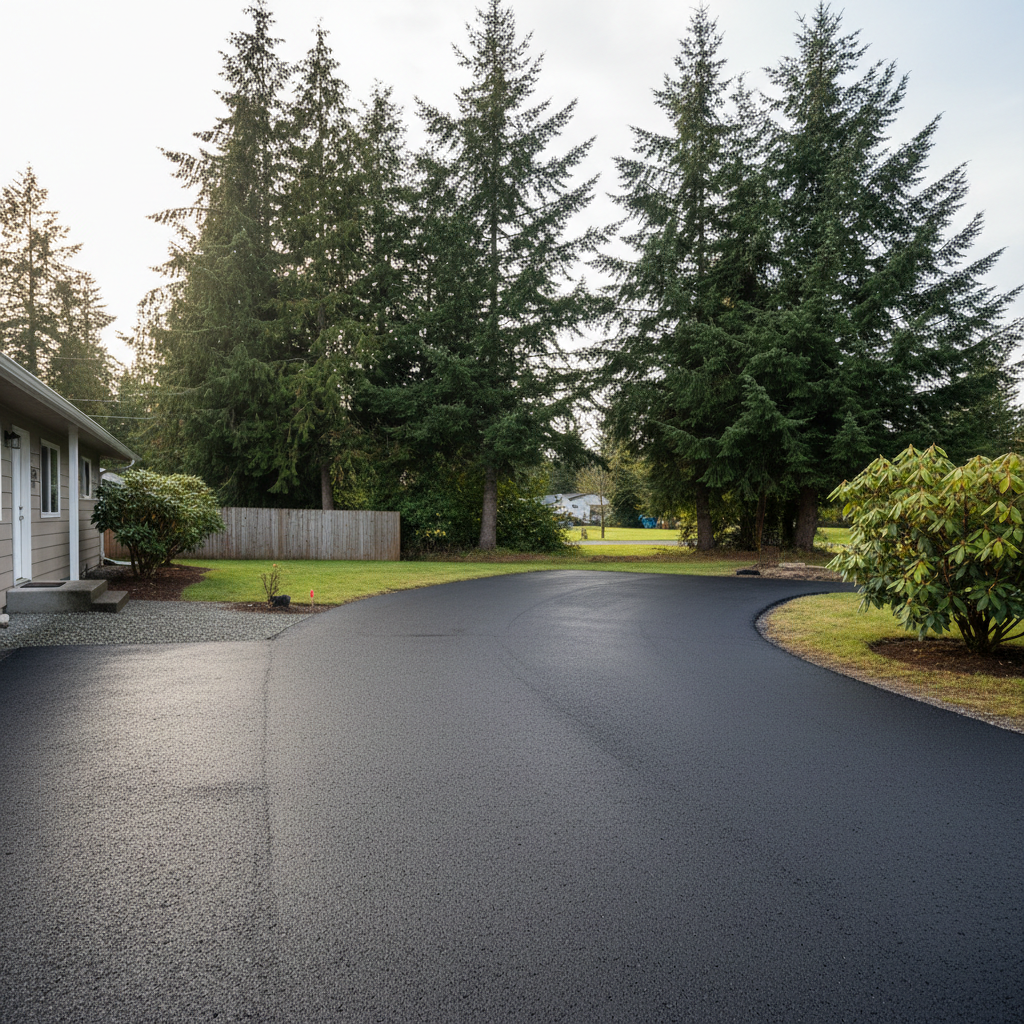
Alright, let's talk brass tacks about commercial asphalt in Lakewood. If you're running a business, you know every dollar counts, and a big project like paving or repairing your parking lot can feel like a black hole for your budget. You want a solid job that lasts, but you don't want to get fleeced. So, what's it really going to cost you?
What Drives Commercial Asphalt Pricing?
There's no single price tag for commercial asphalt, and anyone who tells you there is without asking questions isn't being straight with you. A lot of factors play into the final cost. Think of it like buying a car — a compact sedan isn't the same as a heavy-duty pickup, right? Same goes for pavement.
- Project Size and Scope: This is probably the biggest one. A small patch job on a loading dock is a lot different from repaving a massive parking lot for a shopping center. We measure in square feet, and generally, the larger the area, the lower the cost per square foot can get because of economies of scale. Mobilization costs, for example, get spread out over more square footage.
- Asphalt Thickness and Layers: How much asphalt do you need? A standard parking lot might get 2-3 inches of new asphalt over a good base, but an area with heavy truck traffic, like a distribution center, might need 4-6 inches or even more, plus a stronger aggregate base. More material means more cost.
- Existing Conditions & Subgrade: What's underneath the current pavement? If your existing asphalt is completely shot, crumbling, or has major drainage issues, we might need to remove and replace it entirely (R&R). If the subgrade (the dirt underneath) is unstable, especially with Lakewood's clay-heavy soils in some areas, we might need to stabilize it or add more aggregate base. That's extra labor and materials. Milling (grinding off the top layer) is usually cheaper than full R&R if the base is still good.
- Drainage Requirements: Proper drainage is crucial. If water sits on your pavement, it's going to break down fast. We might need to adjust grades, install catch basins, or add French drains. This adds to the complexity and cost.
- Site Accessibility: Can our equipment easily get in and out? Tight spaces, busy areas, or sites with limited access can slow down the crew and increase labor costs.
- Traffic Control: If we're working on a busy street or in a high-traffic parking lot during business hours, we might need flaggers, cones, and signage to keep everyone safe. That's an added expense.
- Striping and Markings: Once the asphalt is down, you'll need parking stalls, arrows, ADA-compliant markings, and fire lanes. This is usually a separate line item, priced per linear foot or per stall.
Typical Cost Ranges You Can Expect
Okay, let's get to some numbers. These are general ranges for commercial work in our area. Keep in mind, these can fluctuate based on asphalt material costs, fuel prices, and specific site challenges.
- Asphalt Patching (Potholes, Small Areas): For small, isolated areas, you might be looking at $3 to $7 per square foot. This often includes saw-cutting out the bad section, cleaning, tack coat, and new asphalt. Minimum charges usually apply for smaller jobs, so a 50 sq ft patch might still cost you $500-$750 because of mobilization.
- Asphalt Overlay (2-3 inches): If your base is good but the surface is cracked and worn, an overlay is a great option. This typically runs from $2.50 to $5.00 per square foot. This includes cleaning, applying a tack coat, and paving a new layer of asphalt.
- Full Depth Removal & Replacement (R&R): This is the most extensive and expensive option. If your pavement is completely failing and the base needs work, you're probably looking at $6.00 to $12.00+ per square foot. This includes demolition, hauling away old material, grading the subgrade, adding new aggregate base, and then paving 3-6 inches of new asphalt.
- Milling & Paving: When we mill off 2-3 inches of old asphalt and then pave a new 2-3 inch layer, it's often in the $4.00 to $8.00 per square foot range. This is a good middle-ground option.
- Parking Lot Striping: Expect to pay anywhere from $0.50 to $1.50 per linear foot for standard lines, and $25 to $75 per symbol (arrows, handicap logos).
So, for a 10,000 square foot parking lot that needs a full R&R, you could be looking at $60,000 to $120,000 or more. For an overlay on the same size lot, it might be $25,000 to $50,000.
What Should Be in Your Quote?
When you get a quote from a reputable company like Oasis Asphalt Inc, it shouldn't just be a single number. You want a detailed breakdown. Here's what I always make sure to include:
- Detailed Scope of Work: Exactly what's being done. Is it R&R? Overlay? Patching? How many inches of asphalt?
- Material Specifications: What type of asphalt mix are we using? What kind of aggregate base?
- Preparation Work: Does it include excavation, grading, subgrade stabilization, crack filling, or milling?
- Drainage Solutions: Any catch basin adjustments, trench drains, or grading for positive drainage?
- Traffic Control Plan: How will we manage access and safety during the project?
- Striping and Markings: A clear breakdown of lines, symbols, and colors.
- Cleanup and Hauling: What happens to the old material? Is site cleanup included?
- Warranty Information: What kind of guarantee do you get on the work?
- Payment Schedule: Clear terms for deposits and final payments.
- Insurance and Licensing: Proof that the contractor is properly insured and licensed.
How to Avoid Overpaying (and Headaches)
You don't want to pay too much, but you also don't want to go with the cheapest guy and end up with a shoddy job that costs more to fix later. Here's my advice:
- Get Multiple Bids: Always get at least three detailed quotes. This helps you compare apples to apples and understand the market rate.
- Check References and Reviews: See what other businesses say about the contractor. A good reputation speaks volumes.
- Ask for a Site Visit: Any reputable contractor will want to come out and inspect your property. They can't give you an accurate quote over the phone.
- Understand the Scope: Make sure every bid covers the same scope of work. If one bid is significantly lower, it might be missing something crucial.
- Don't Rush into a Decision: Take your time to review the quotes and ask questions. A good contractor will be happy to explain everything.
- Beware of Door-to-Door Sales: If someone shows up unannounced offering a deal because they 'just finished a job down the street,' be very wary. These are often fly-by-night operations.
- Prioritize Quality Over Price: A slightly higher upfront cost for a quality job means less maintenance and a longer-lasting pavement. It saves you money in the long run.
Your commercial asphalt is an investment in your business's curb appeal, safety, and operational efficiency. Do your homework, ask the right questions, and you'll get a fair price for a job that lasts.